How connected feedyard technology helps producers manage cattle more precisely
By MWI Animal Health

Key takeaways
- Connected feedyard systems help information move from the bunk reader to the office without manual handoffs.
- Animal-level data helps producers make more precise feeding, health, and marketing decisions.
- Reliable, integrated data gives managers greater confidence in daily operational decisions.
- Understanding variation between individual cattle can support better performance and profitability.
For decades, successful feedyard management depended on experienced people making thousands of decisions every day. The challenge wasn't doing the work. It was making sure the right people had reliable information at the right time.
Few people have seen the industry’s technology shift as closely as Tom Fanning, the General Manager of Pratt Feeders Group, which operates four feedyards in Kansas and Oklahoma that collectively have a capacity of almost 140,000 head of cattle.
Reflecting on his early career, he described a very different operating environment. “When I first came into the feedyard, we were calculating feed calls for the pens by hand with a card.”
What once required hours of calculations, phone calls and paperwork can now happen through connected systems. But for Fanning, the biggest advancement is not simply replacing paper. It is “the ability to manage the individual animal instead of the pen.”
How does individual-animal management improve feedyard performance?
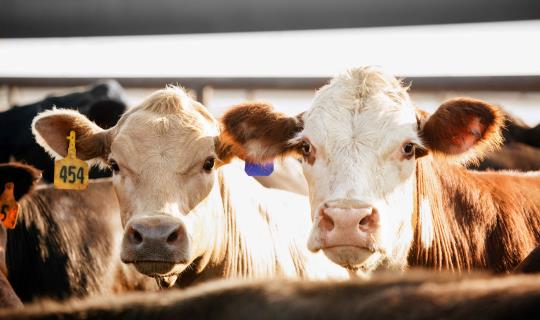
Historically, feedyards managed cattle primarily as groups. Feeding, health, and marketing decisions were often based on pen averages. Yet every pen contains meaningful variation: some cattle finish differently, some perform better than expected and some require a different management strategy. Individual-animal management makes that variation more visible. Electronic identification, individual weights, health events and performance records can create a more precise picture of each animal. At Pratt Feeders Group, animal-level information can also be considered alongside genetic data, including DNA markers related to traits such as marbling and intake.
“The more, the closer you can get to the actual animal in your management, the more accurate you can be,” explained Fanning.
That added precision can change daily decisions. Treatment histories and weight performance can help identify cattle that need additional attention. Managers can also distinguish cattle approaching an appropriate marketing endpoint from those that may benefit from more time on feed.
The goal is no longer simply to manage a pen of cattle. It is to understand the strengths, challenges and opportunities represented by each animal in that group.
How do connected systems move information through the yard?
At Pratt Feeders, the Pro-Control Plus® Feed Batching System and Micro-Weigh® Micro Ingredient Delivery System support accurate feed rationing; the Read-N-Feed® Bunk Reading System and GPS Feed Truck System support feed delivery workflows; Accu-Trac® Drug-Trac and Accu-Trac Scale® capture health, cattle processing, and weight information. Accu-Trac Office ties it all together with operational visibility.
The value is not in the number of tools. It is in how each part of the operation helps information move through the operation without manual handoffs. Individual-animal insight depends on information moving through the operation.

According to Fanning, one of the most valuable benefits is removing communication bottlenecks. “It takes the communication of, ‘I need to call this guy or this person and tell them X, Y, and Z.’ That’s done. It’s fully integrated.”
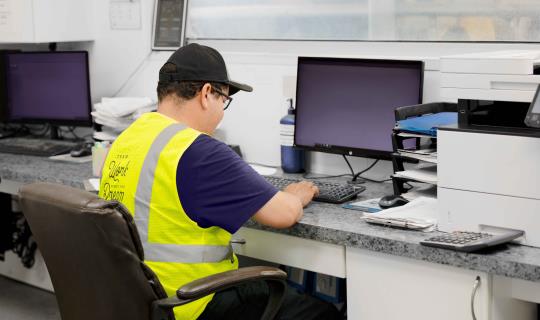
Instead of tracking down information, employees can see whether cattle arrived overnight, animals are headed to processing, feed schedules changed or inventory needs attention. Everyone can work from the same information.
Why is integrated feedyard data important?
Connected systems can provide timely visibility into
- feed performance
- inventory
- health activity
- scale data
- operational trends
That visibility supports practical decisions across the yard. A change in bunk conditions can prompt a feeding adjustment. Treatment and weight records can help identify cattle that need closer attention. Performance information can help managers sort or market cattle according to their potential rather than applying one decision to the entire pen.
“What it does also is it gives you confidence in some of your decision making, right?” said Fanning. “Because your data that you’re making that decision on is reliable and accurate.”
For organizations with multiple feedyards, connected information can also support consolidated reporting, comparisons across sites and a more complete view of customers’ cattle. Pratt Feeders is implementing Accu-Trac® Hub to support that broader multi-location view.
How can precision improve profitability?
As cattle variation becomes more visible, so do opportunities to improve profitability. Animal-level data can help managers identify higher- and lower-performing cattle, sort more effectively and make more precise feeding and marketing decisions.
Fanning described the philosophy. “We’re not worrying about two hundred. We’re worrying about each individual having them in the right bucket. If we manage the small things, the big things take care of themselves.”
The approach can create value on both sides of the ledger. More precise management may help cattle reach the most appropriate marketing endpoint, support better use of feed and other resources, and reduce the risk of costly discounts.
“I increase my revenue and I decrease my cost at the same time,” Fanning said. “It’s a win-win on both of those measures.”
Animal-level health, scale, feeding and carcass information can help managers compare expectations with actual outcomes and refine future decisions. That feedback is important because cattle may vary more than group averages reveal.
“The good ones, like the high-performing cattle, are capable of a lot more than we knew they were,” Fanning observed. “And we’ve learned that the poor-performing cattle cost us a lot more
What is the future of feedyard management?
He sees Pratt Feeders progress as a journey rather than a destination.
“It’s like going up a mountain. You think you get to the top and plateau. Then there’s a new technology or a new system or a new way of managing the data or integrating the system that comes available. It lets you see, ‘Oh, there’s another peak I can go to now.’”
The next peak for feedyards may not be another standalone tool. It may be the ability to connect reliable information across the operation and understand each animal with greater precision than ever before.