Track feed costs save time and make better cattle decisions
By MWI Animal Health
Key takeaways:
Stocker1's feed truck integration helps stocker and backgrounding operations:
- Save time by eliminating manual feed entry
- Track feed costs and break-even more accurately
- Connect feeding activity to cattle performance
- Improve inventory management
- Make better management decisions
Feed is one of the largest variable costs in a stocker or backgrounding operation, but many producers still manage feed delivery with paper records, handwritten notes, or delayed data entry.
That can make it difficult to know whether cattle received the planned ration, how accurately ingredients were loaded, or where feed costs are changing across pens and groups.
As margins tighten and operations become more complex, producers need feeding records they can trust. MWI Animal Health’s Stocker1 new feed truck integration brings feed delivery information into the same platform producers use to manage cattle performance, animal health, inventory, and costs.
“The addition of the feed truck is an extremely crucial piece in a system producers use to manage cattle and costs,” explains Jason Douglas, Territory Manager for MWI. “The simplicity and ease with which individual or even sets of calves can be sorted and transferred from group to group without losing their associated cost ensures producers can have accurate records, regardless of cattle movement.”
Why is feed delivery tracking important in a stocker operation?
In many operations, feed delivery records are still captured on paper and entered into the system later. While that process may work, it creates opportunities for delays, errors, and missing information.
Shane Walter, MWI Animal Health’s Stocker1 Product Owner explained the goal was to help producers move away from paper-based feeding workflows and reduce the lag between feed delivery and management visibility. “We wanted to automate the feeding process, reducing the amount of paperwork they had to do and allow for more accurate data collection”
How does feeding accuracy affect cattle performance?
Feeding accuracy influences more than feed expenses. When actual loading of ingredients or feed delivery varies from the planned ration, cattle may not receive the intended nutritional balance.
Over time, those differences can affect cattle health, feed efficiency, weight gain, inventory management, and overall cost of gain. For smaller backgrounding and stocker operations, the burden is often less about whether records exist and more about how much time it takes to keep them current.
Bryan Rickard, Director of Strategic Accounts at MWI Animal Health, who also uses Stocker1 in his small feed yard at home, said many of these operations still rely on paper notes, spreadsheets, or feed sheets that must be keyed in later.
“The kind of smaller operations that don’t have a solution today, a lot of those guys do stuff on paper and try and generate invoices that way,” Rickard noted. “And our system will do complete invoicing.”
The feed truck integration helps close that gap by recording feed activity as it happens, so the record is current by the time the feeding work is done.
How does the Stocker1 feed truck integration work?
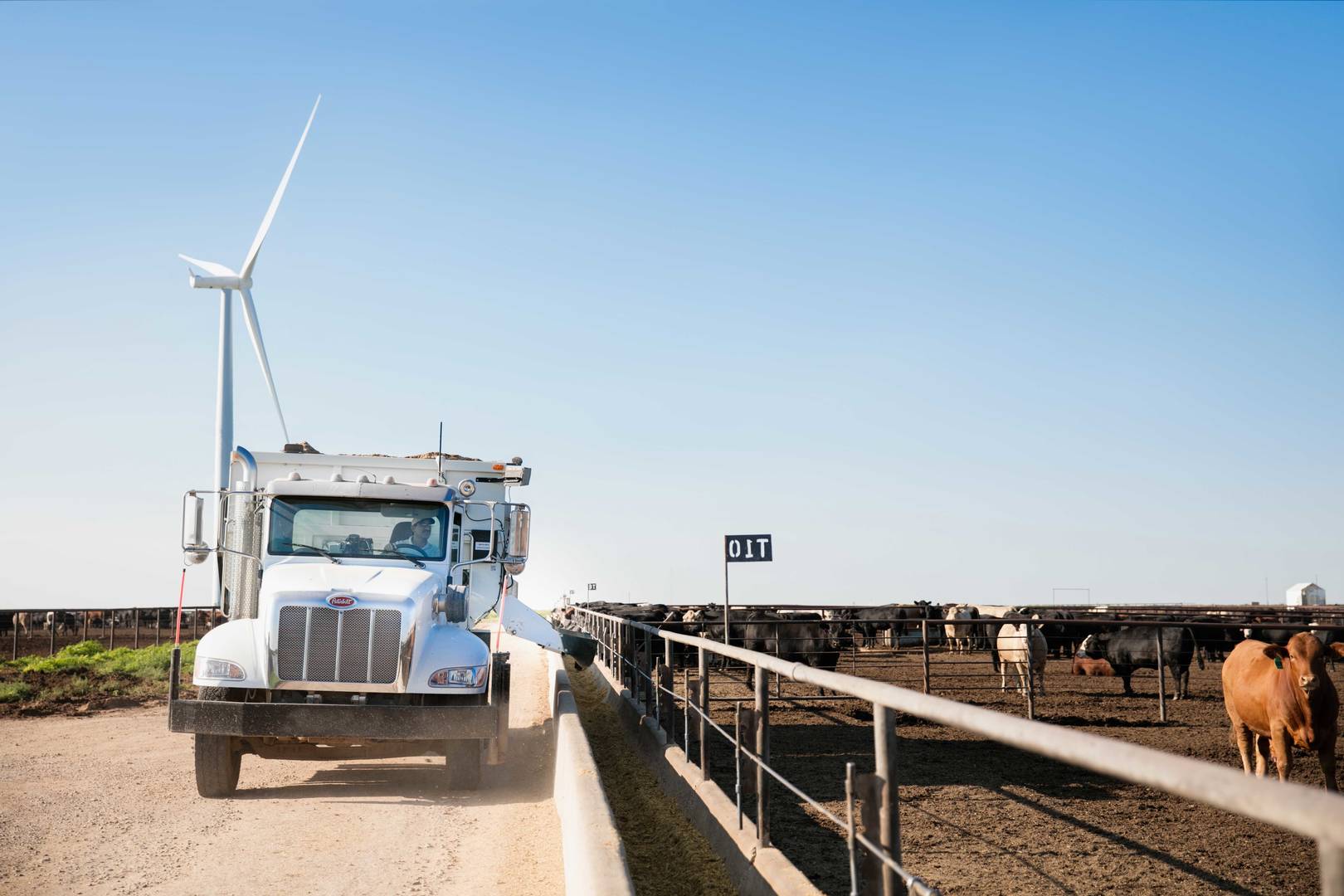
The feed truck integration connects feeding activity directly with the Stocker1 platform.
Producers create feed plans and ration information in Stocker1, operators load and deliver feed through the feed truck workflow, and actual loading and feeding activity flows back into Stocker1.
That creates a more complete record of what was planned, what was loaded, and what was delivered. "We schedule the loads on Stocker1 and then it gets picked up by the feed truck and then they can build and feed the loads offline,” Walter Water said.
By digitizing feed delivery workflows, producers can reduce paperwork, eliminate duplicate data entry, and document time savings from keeping records current.
“It’s adding value for the guy standing there trying to enter data instead of doing other work,” Rickard said. He estimates workers could save an hour a day by not having to enter information.
That means employees can spend less time entering data after feeding and more time tending cattle, checking pens, and doing the work that directly supports animal care and performance.
3 outcomes this integration can help producers achieve
1. Save time by reducing paper, re-entry, and end-of-day catch-up
One of the biggest advantages of the integration is that feeding information is captured closer to when the work actually happens. “If it’s from the feed truck, it’s going to be real time,” Walter noted. “Whoever’s managing can see that real time and not wait until the data is entered later on.”
2. Know costs by connecting feed, inventory, and break-even
Feed truck is not simply a digital version of a paper feed sheet. Its value increases when feeding records are connected to the broader Stocker1 platform, giving producers a more complete view of costs, cattle inventory, treatments, performance, and current break-even calculations.
Stocker1 helps producers track:
- Feed costs
- Animal health costs
- Medicine costs
- Receiving costs
- Inventory
- Current break-even
“It gives you a current break-even of where you’re at on those cattle every single day,” Rickard explained. “So if you’re up to date, it gives you an accurate break-even.”
In a changing cattle market, that visibility can help producers understand what a group is costing them and whether market conditions point toward holding, adjusting, or selling.
3. Make better cattle decisions with a clearer full-operation view
Timely feeding data becomes more useful when it helps explain what is happening across pens and groups. Producers can see what was planned, what was loaded, what was delivered, and how those feeding decisions connect to cattle performance.
The new integration includes feed variance and load variance reporting capabilities. “We have load variance and feed variance reports,” Walter said. “We can run that by driver, by load, by ingredient, by everything.”
Those reports can help managers spot patterns, coach employees, improve ration execution, and better understand where expensive ingredients are going.
Why feed truck matters as part of the Stocker1 platform
Feed delivery is only one piece of managing a successful operation. What differentiates the feed truck integration is its connection to the broader Stocker1 platform.
Stocker1 combines:
- Feed management
- Animal health records
- Inventory tracking
- Billing and invoicing
- Reporting
- Performance monitoring
That full-operation view is also where Rickard sees Stocker1 occupying a practical sweet spot.
Larger feed yard systems can be more advanced than smaller operations need, while standalone tools may address animal health or feeding without tying the full workflow together.
“It is kind of a streamlined solution for that smaller operation. Some of the other competing products will do a good job on the animal health side. Some do a good job on the feed side, but none of them really tie it all together,” said Rickard.
Stocker1 gives smaller backgrounders a practical way to process cattle, record treatments, manage feed, track movements, create invoices, and evaluate performance without forcing them into an oversized system. The current additions to the robust Stocker1 platform also include access to MWI's myAnimalRx, an online system for producers to order medications and products directly from their veterinarians anytime.
As Walter emphasized, "We're not here just to sell you software and then have a nice day. We're here to help you manage your operation."
The new feed truck integration helps producers do more than automate feed delivery. It helps them save time, know their costs, and make better cattle decisions by bringing feed activity, inventory, animal health, billing, and performance information into the same workflow.