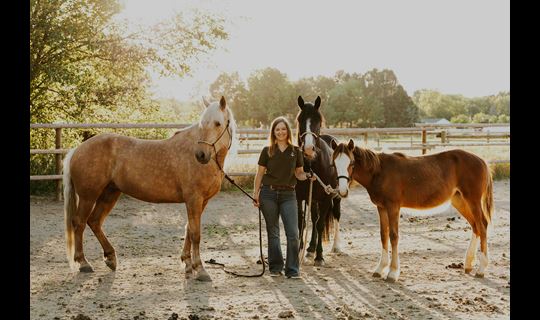
Equine veterinarians’ vital role in identifying and containing New World screwworm
By MWI Animal Health

This article is intended to communicate MWI Animal Health's capabilities which are backed by the author’s expertise. However, MWI Animal Health and its parent, Cencora, strongly encourage readers to review the references provided with this article and all available information related to the topics mentioned herein and to rely on their own experience and expertise in making decisions related thereto as the article may contain certain marketing statements and does not constitute legal advice.
The 1st case of New World screwworm in the United States has been identified. Authorities confirmed in early June that a calf in La Pryor, Texas, has been infected. For equine veterinarians, this is a reminder that NWS is not just a cattle issue. The AAEP has emphasized that horses are susceptible, that even very small skin breaks can attract egg-laying flies, and that heightened awareness, active surveillance, and rapid reporting of suspect cases are now essential. MWI highly recommends veterinarians monitor news from the U.S. Department of Agriculture.
"Veterinarians are the trusted experts on the ground who possess the medical expertise required to limit animal suffering and prevent further spread of this parasite," said Dr. Michael Q. Bailey, President of the AVMA in a press release.
What is New World screwworm?
New World screwworm (NWS) is a parasitic insect, scientifically known as Cochliomyia hominivorax, that is notorious for its devastating impact on animal health. The New World screwworm is a parasitic fly whose larvae feed on the living tissue of warm-blooded animals. Female flies lay eggs in open wounds, and within hours, the larvae hatch and begin burrowing into the host’s flesh, feeding on live tissue. The infestation can quickly escalate, leading to severe health issues, secondary infections, and, in some cases, death if untreated.
Understanding the risks and implementing effective measures is crucial. Historically, the United States had eradicated NWS in the 1960s through a sterile insect technique, meaning many veterinarians have gone their whole careers without encountering it.
In spring 2025, however, cases were identified in Mexico. The United States Department of Agriculture (USDA) issued the immediate suspension of live cattle, horse, and bison imports through United States ports of entry along the southern border on May 11, 2025, in an attempt to curb this spread, a suspension that is ongoing.
What does this mean for horses and equine veterinarians?
For equine practitioners, NWS should be viewed as a real clinical and biosecurity concern that warrants vigilance now. According to AAEP guidance, horses are susceptible to infestation, particularly when they have wounds, recent surgical sites, tick or insect bite sites, or fresh foal umbilici. Infestation can also occur at mucocutaneous junctions such as the nostrils, lips, ears, vulva, prepuce, and periocular tissues. Infestations can cause excruciating pain, tissue destruction, secondary bacterial infection, toxemia, and, in severe untreated cases, death.
Equine veterinarians should maintain a high index of suspicion for wounds that are enlarging, draining, foul-smelling, painful, or nonhealing. Visible larvae or egg masses at wound margins should be treated as an urgent diagnostic and reporting concern. In other words, as an equine veterinarian, you may be among the first to recognize a suspect case and help prevent local establishment through early action.
In March 2026, the FDA issued an Emergency Use Authorization (EUA) for F10 Antiseptic Wound Spray with Insecticide (benzalkonium chloride, polyhexanide, and cypermethrin topical solution) for the prevention and treatment of New World screwworm.
The agency has concluded the spray may be effective against NWS myiasis in horses. References for effective use can be found here. The potential benefits of the product outweigh its known and potential risks, says the FDA.
Additional treatment options
Veterinarians are empowered to prescribe extra-label treatments for New World screwworm. Some medications on the market are either approved under the EUA to treat horses with New World screwworm. As an MWI customer, you can purchase many of these items from our online store.
|
Product |
Approval level |
|
F10 Antiseptic Wound Spray with Insecticide |
EUA |
|
F10 Antiseptic Barrier Ointment with Insecticide |
EUA |
|
Negasunt Powder |
EUA |
| Dectomax/Dectomax-CA1 | EUA |
What do all these terms mean, you may be wondering? According to the FDA, under a conditional approval the manufacturer must prove “reasonable expectation of effectiveness.” A full approval is “substantial evidence" of effectiveness.
Under an EUA, the FDA can fast track approvals of certain drugs to benefit the public health when they determine there are no adequate alternatives on the market.
Extra-label drug use permits practitioners, including veterinarians, to prescribe medications for reasons not explicitly stated on the product label. These treatments are limited to situations where the animal’s health is in jeopardy, and the animal may suffer or die without treatment. The prescribing veterinarian must have a VCPR in good standing and only medications under full FDA approval qualify for extra-label use.
You can also stop the spread of the disease through the use of insecticides. The Federal Insecticide, Fungicide, and Rodenticide Act (FIFRA) permits their use for NWS.
Ongoing containment efforts
Federal and state agencies play a critical role in controlling NWS outbreaks. Policies surrounding quarantines, animal movement, and funding for eradication programs are vital in containing the threat.
The USDA has announced a multi-national containment plan. This includes the opening of a sterile fly dispersal facility in Edinburg, Texas, and investing twenty-one million dollars to upgrade a facility in Mexico. These efforts aim to produce millions of sterile flies weekly to halt the parasite's northward migration and complement existing efforts in Panama and Mexico, where sterile flies are already being produced.
The sterile insect technique, which involves releasing sterilized male flies to suppress breeding populations, has been a cornerstone of past eradication efforts. Continued investment in this method, along with research into new control technologies, is crucial. Colin Woodall, CEO of the National Cattlemen's Beef Association, emphasized the importance of building domestic sterile screwworm fly facilities, stating, “We must produce sterile flies ourselves here on our soil to effectively eradicate the New World screwworm.”
The government plans to disperse the sterile flies across area about 50 miles into Texas, along the U.S. border with the state of Tamaulipas, Mexico. To ensure officials can tell the difference between sterile and wild NWS flies, USDA will dye the sterile pupae, and the dye will transfer to the sterile flies when they hatch. The fluorescent dye will glow under UV light and may also be visible to the naked eye. If a sterile fly is captured in a trap, this dye will allow animal health officials to quickly rule the fly out as a threat.
5 best practices to control NWS spread
Preventing the spread of NWS requires a proactive approach. Equine practitioners should think of suspected cases as both a medical issue and a biosecurity event. That means staying informed about regulatory updates, educating clients, and acting quickly when a wound looks abnormal or contains larvae. Collaboration between veterinarians, horse owners, and government agencies is essential to preventing local establishment.
- Wound management: Regularly inspect horses for open wounds, including minor abrasions, tick or insect bite sites, recent surgical incisions, and foal umbilici, as all can serve as sites for NWS egg-laying. Promptly clean, protect, and monitor wounds to minimize the risk of infestation.
- Fly control measures: Use insecticides and repellents to reduce fly populations around horses. Barn managers should also implement fly traps and maintain clean environments to discourage fly breeding.
- Quarantine and inspection: Isolate new or returning animals before introducing them and thoroughly inspect wounds, body openings, and other high-risk sites. If NWS is suspected, immediately isolate the animal and follow state or federal guidance for examination, sample collection, and movement restrictions.
- Collaboration with public health officials: Report any suspected cases to state or federal animal health authorities immediately to aid in outbreak tracking and containment. Equine veterinarians play a frontline role in recognizing suspect lesions, initiating early response, and helping prevent local establishment through rapid reporting.
- Education and monitoring: Stay informed about local outbreaks and warnings from agricultural agencies. Awareness of high-risk seasons and regions can help animal health professionals take timely preventive measures.
Key takeaways
- Stay informed: Monitor local outbreak reports and follow guidance from agricultural agencies and equine veterinary organizations.
- Inspect regularly: Check horses often for wounds, body openings with discharge, or signs of larvae, and do not overlook even very small skin breaks.
- Implement fly control: Use insecticides, traps, and repellents to reduce NWS populations.
- Isolate suspect animals: Separate animals with suspicious wounds or larvae while you seek guidance and next steps from animal health officials.
- Report cases urgently: Work with authorities immediately to investigate, track, and contain suspected infestations.